TROPICAL Butterfly Milkweek
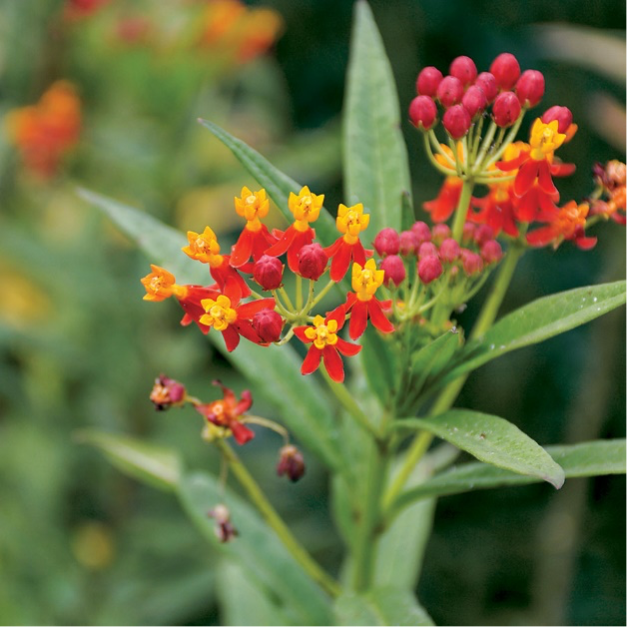
Scientific Name: Asclepias curassavica
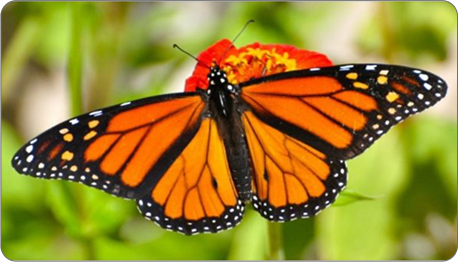
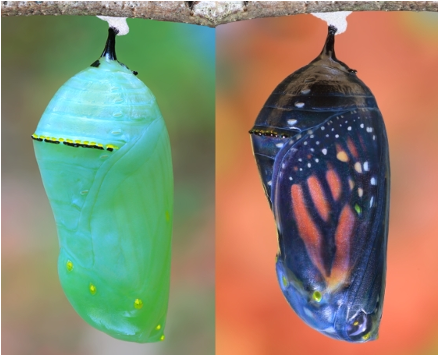
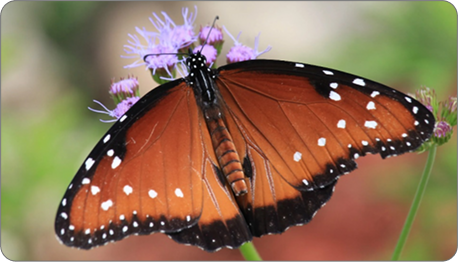
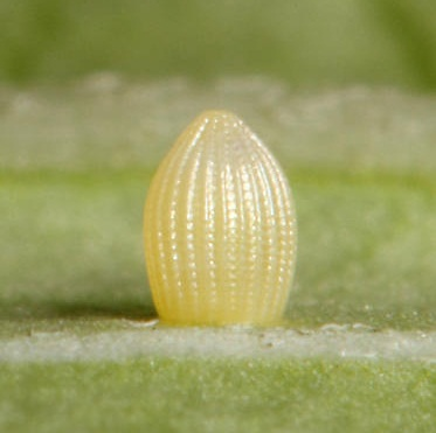
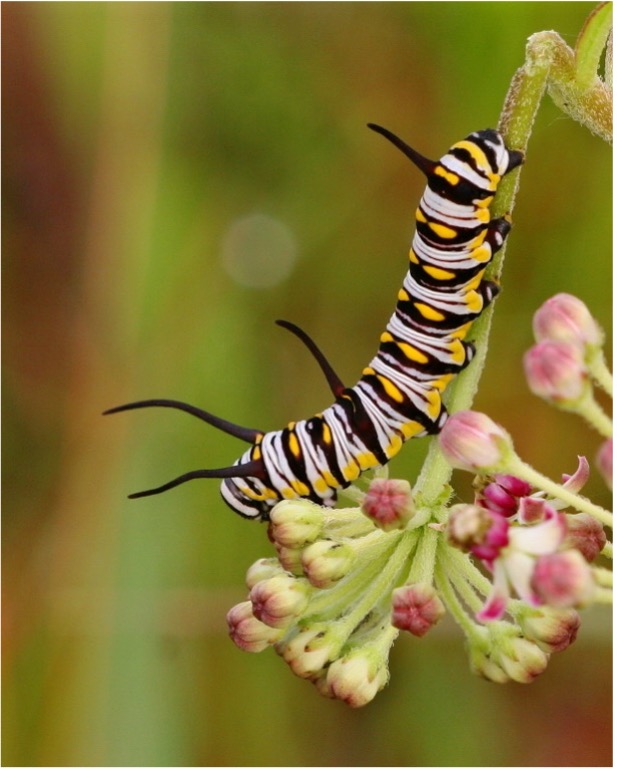
Host to: Monarch’s, Queen, Gray Hairstreak
Bloom time: Spring to first frost
How to Identify: It typically grows as a subshrub to 2-3’ tall on upright stems clad with pointed, opposite, lanceolate leaves (to 6” long). Leaves are medium green sometimes with white midribs. Showy flowers with five sepals and five lobes appear in rounded axillary clusters in late spring to early summer. Flowers are red-orange with yellow hoods.. Flowers are followed by long, narrow seed pods (3-4” long) which split open when ripe releasing silky tailed seeds for dispersal by wind. Stems and leaves exude a milky sap when cut or bruised.
General: A herbaceous perennial native to the Caribbean, Central and South America, and Mexico. Naturalized in tropic and subtropic regions. Can grow up to 2-3 feet. Attracts butterflies and hummingbirds.
Habitat: Full sun, medium water
GREGG’S Mist Flower
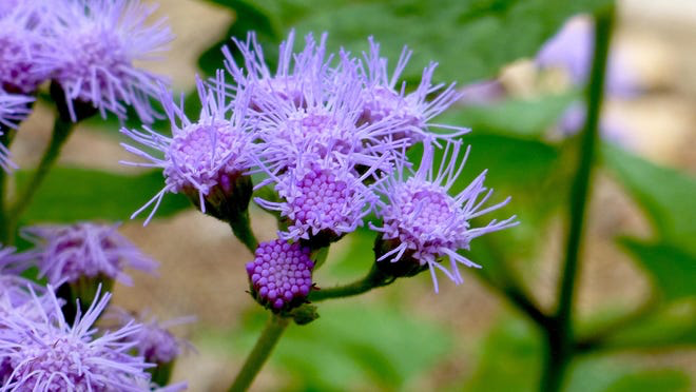
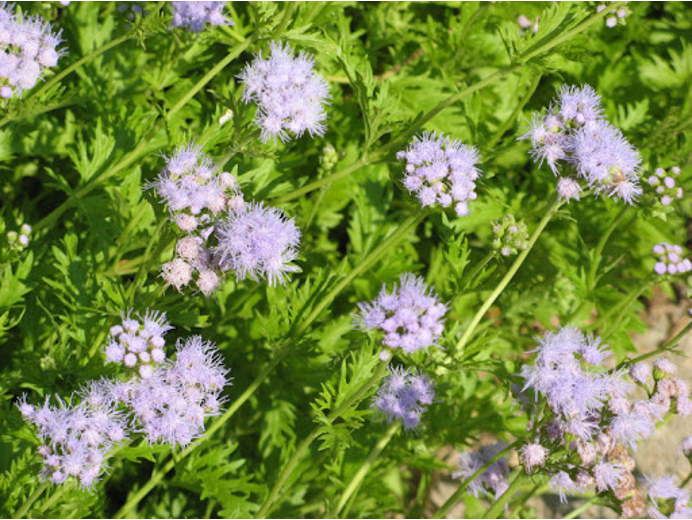
Scientific Name: Conoclinium greggii
Host to: Rawson’s Metalmark
Bloom time: Spring to late fall.
How to Identify: Is a perennial up to 2 ft. tall with palmate leaves deeply divided into three lobes which are again pinnately dissected. Small, purplish-blue flowers cluster together to form puffy, 2 in., cushion-like flower heads.
General: Native to Texas, Arizona, New Mexico, and Mexico states. Also known as Purple Palm leaf Eupatorium, this plant is an herbaceous perennial that attracts butterflies. It provides nectar to all species drawn to the divided flowers.
Habitat: Medium water, full sun to part shade, likes gravelly dry soil.
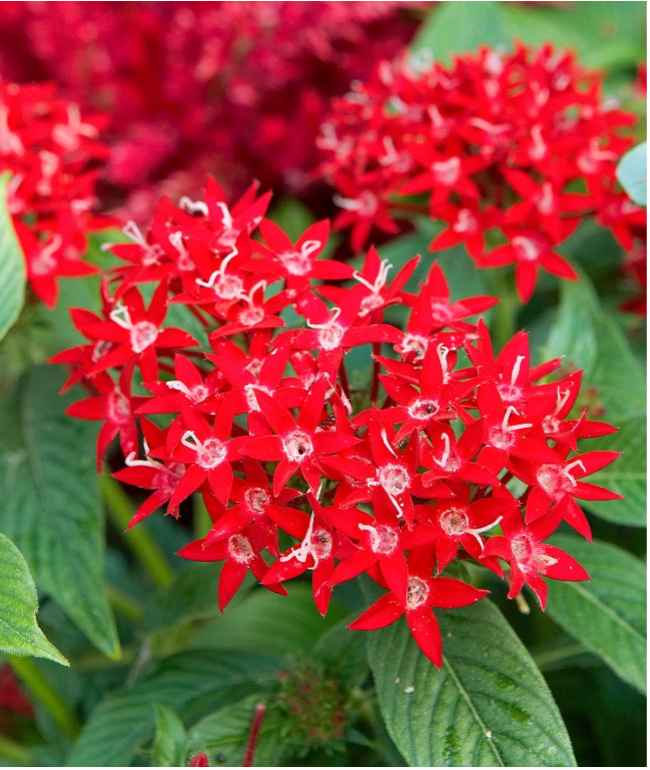
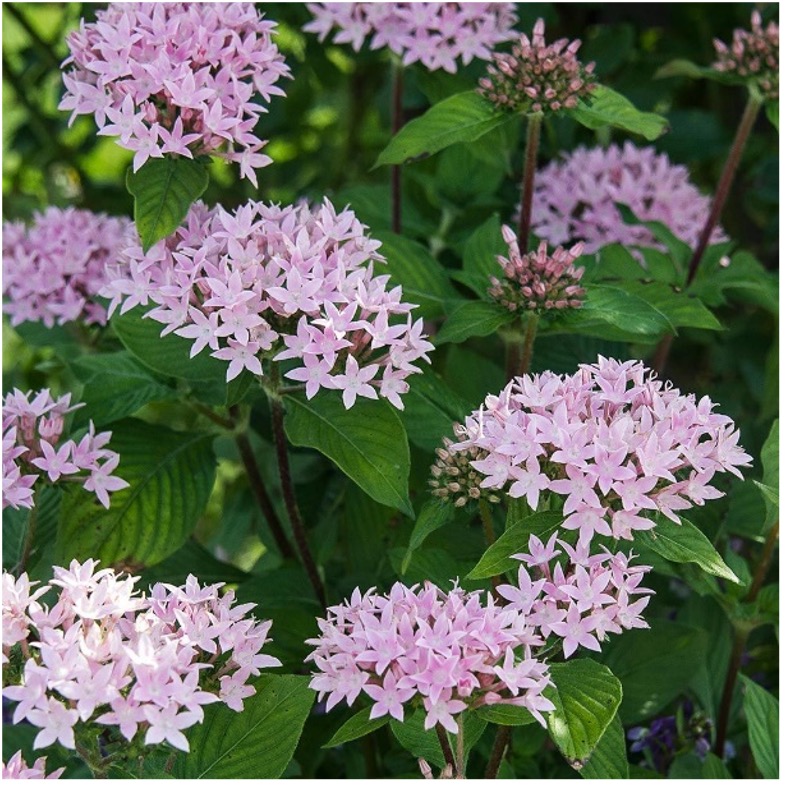
PENTAS
Scientific Name: Pentas lanceolata
Host to: Provides nectar to all butterflies but no one species host plant.
Bloom time: Seasonal bloomer and doesn’t die back in the winter.
How to Identify: It is a many-branched, somewhat sprawling plant that features 4” wide rounded clusters of star-shaped flowers. Elliptic to lanceolate dark green leaves (to 6” long). Flowers are pink, magenta, lilac or less commonly white.
General: This is anherbaceous perennial native to the Arabian peninsula and eastern Africa. They attract butterflies to their nectar.
Habitat: Likes full sun, medium water levels, likes well-draining fertile soil.
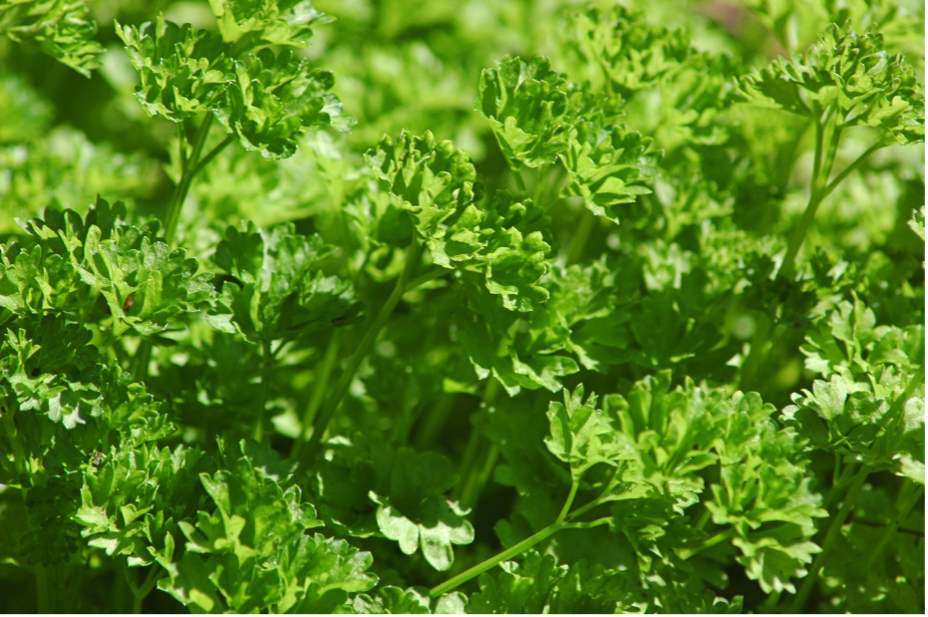
PARSLEY
Scientific Name: Petroselinum crispum
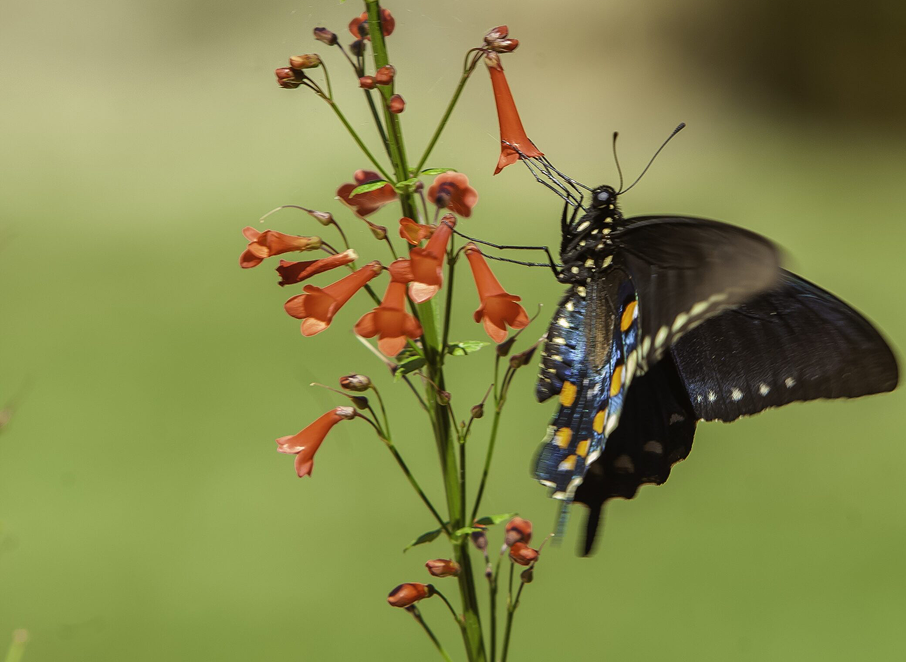
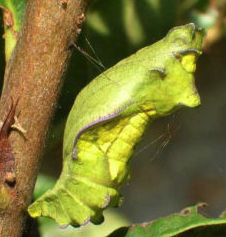
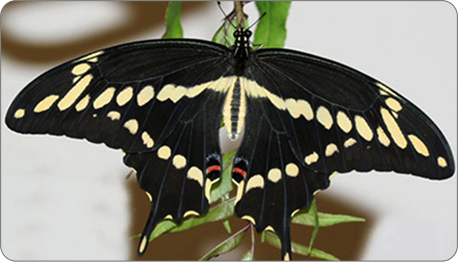
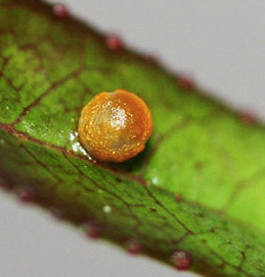
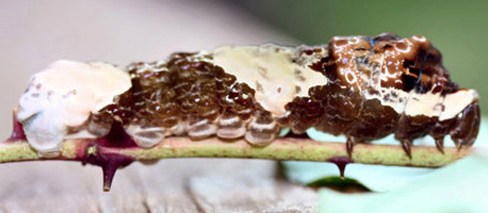
Host to: Black Swallowtail
Bloom time: Seasonal bloomer that doesn’t die back in winter.
How to Identify: It typically grows in a clump to 12″ tall and as wide. Triangular dark green leaves are finely divided into curly leaflets. Leaves remain harvestable until temperatures drop into the low 20s F but will remain strong throughout winter in warm winter climates. Plants will bloom in the 2nd year by sending up stalks to 2-3′ tall bearing compound umbels of greenish-yellow flowers but will lose flavor after it blooms.
General: Is an annual herb native to Greece and Yugoslavia. It is a culinary herb grown worldwide and can be used fresh or dried.
Habitat: Full sun to part shade, medium water levels.
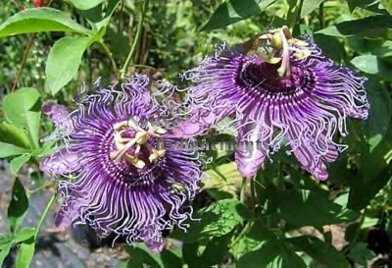
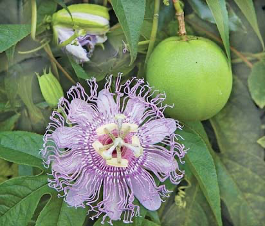
PURPLE Passion Vine
Scientific Name: Passiflora incarnata
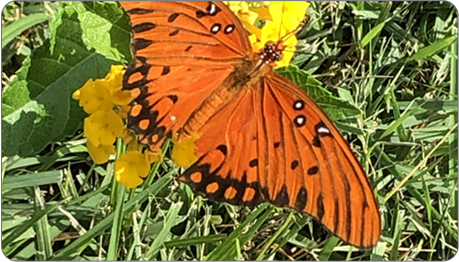
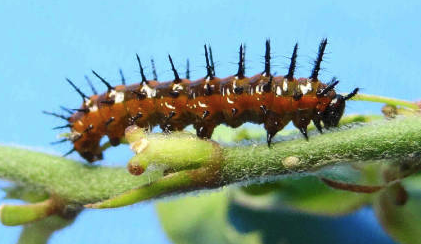
Host to:: Gulf Fritillary, Variegated Fritillary, Julia Heliconian, and Zebra Heliconian
Bloom time: April through September
How to Identify: Purple passionflower is anherbaceous vine, up to 25 ft. long, that climbs with axillary tendrils or sprawls along the ground. Intricate, 3 in., lavender flowers are short stalked from leaf axils. The petals and sepals subtend a fringe of wavy or crimped, hair-like segments. The pistil and stamens are also showy. Three-lobed, deciduous leaves are dark green above and whitish below. The fruit is a large, orange-yellow berry with edible pulp. The bloom colors can be pink, blue, and purple.
General: Native to the lower 48 states, this perennial vine spreads by root suckers.
Habitat: Water needs are low to medium, likes full sun to part shade, likes the soil levels to be dry to moist, is cold and heat tolerant, and grows in rich, non-saline clays, loams, and sands.
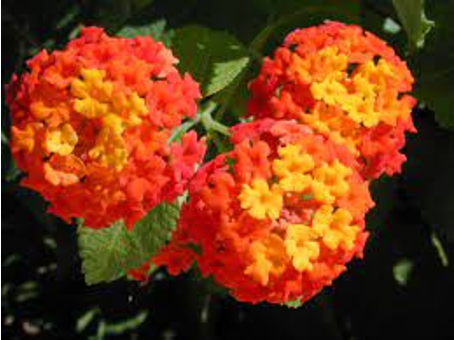
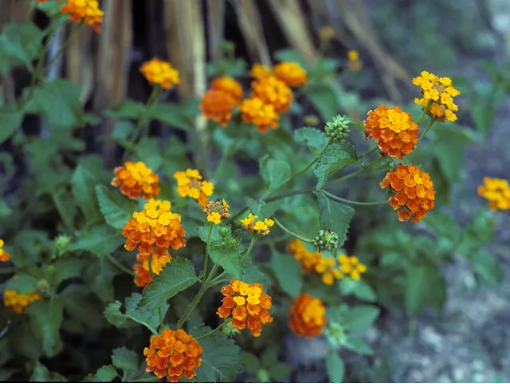
TEXAS Lantana
Scientific Name: Lantana urticoides
Host to: Provides nectar to all butterflies but no one species host plant.
Bloom time: April through October
How to Identify: A spreading shrub, much branched from the ground upward, branches sometimes with prickles. Frequent in brushy places and in woodlands. Bark light gray to light brown, tending to flake off. Young twigs nearly square in cross section, covered with short hairs visible under a 10x hand lens. Leaves opposite, up to 2 1/2 inches long, broadly ovate, pointed at the tip, flattened at the base, upper surface rough to the touch; margins coarsely toothed, teeth broad, pointed or rounded. Flowers colorful, red, orange, and yellow, tubular with four flared lobes; in dense, rounded clusters with a leafy bract subtending each flower, at the ends of long paired stems usually extending beyond the leaves, appearing from April to October. Fruit round, fleshy, dark blue to black.
General: Native to Texas, New Mexico, Arizona and Mexico this perennial shrub has red orang and yellow blooms. Their native habitat includes fields, thickets, swamps, rich sandy woods, scrub, gravelly hills, flats, chaparral, and roadsides almost throughout Texas. Crinkly leaves give off a sharp aroma when touched and they can cause a skin rash.
Habitat: Low Water use, requires full sun, likes dry, poor well-draining soil.